

It was a rainy Monday morning in London. Sarah, an IT manager at a growing fintech startup, walked into her office only to find her inbox filled with headlines like “AI Tools Can Now Handle IT Management Tasks”. Her junior team members were whispering: “What if AI takes our jobs? Do we even need managers anymore?”
Sarah smiled. She knew the truth—while AI is powerful, it can never truly replace the human touch, leadership, and decision-making that an IT manager brings.
This is the story of many businesses are living today. With the rise of Artificial Intelligence (AI), one big question stands out: Will AI replace IT managers? The short answer is No—and here’s why.

AI Can Automate, But It Can’t Lead
AI tools are excellent at automating repetitive tasks—like monitoring servers, detecting suspicious activities, or generating performance reports. For example, in a large retail chain in Manchester, AI software reduced downtime by predicting hardware failures weeks before they happened.
But here’s the catch: when the system flagged an unusual security breach, it was the IT manager who made the judgment call—whether to shut down operations, alert stakeholders, or find an alternative solution.
AI can assist, but it cannot lead under uncertainty, something only humans can do.
The Human Side of IT Management

An IT manager isn’t just about handling systems. They manage people, strategies, and critical decisions. Imagine a hospital in Birmingham suddenly facing a ransomware attack. AI can identify the breach, but it cannot:
- Communicate calmly with doctors and nurses,
- Reassure patients,
- Negotiate with vendors,
- Or create a crisis strategy on the spot.
These soft skills—empathy, leadership, negotiation—are deeply human, and no AI algorithm can fully replace them.
Why Every Businesses Still Rely on IT Managers?
- Compliance and Regulations
It has strict data protection laws (GDPR). Only an IT manager can interpret legal language and ensure teams follow compliance—not an AI tool. - Strategic Planning
AI suggests solutions, but only managers decide what fits the company’s long-term goals. For example, choosing whether a business in Leeds should adopt AWS or Microsoft Azure depends on costs, culture, and team skills—not just data. - Building Trust
Employees trust managers, not machines. A good IT manager motivates the team during long nights of system upgrades or cybersecurity threats.
How AI and IT Managers Work Together?
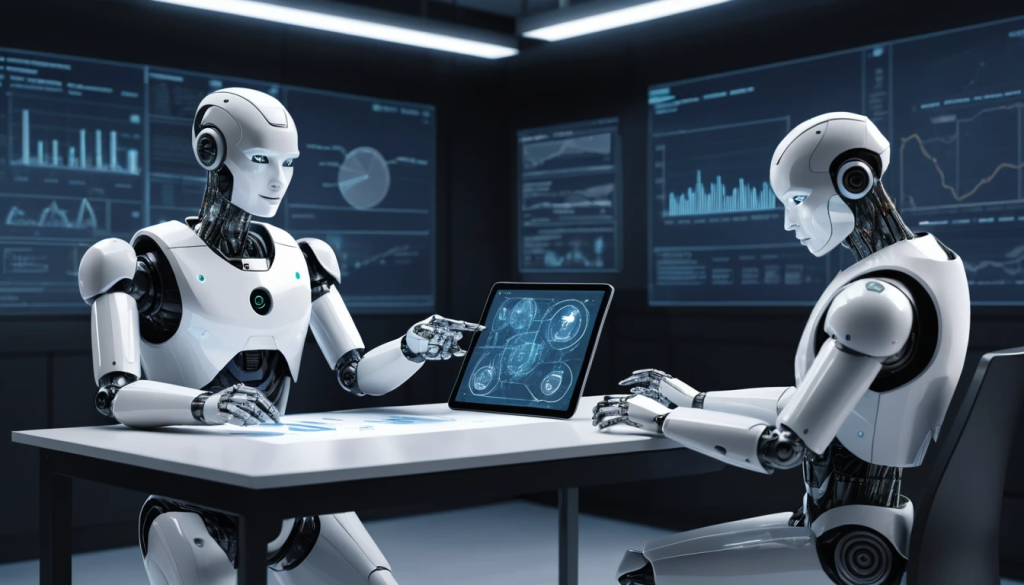
Instead of thinking “AI vs IT Managers,” the future is AI + IT Managers. AI acts as the assistant, and IT managers act as the leaders.
- AI handles: routine monitoring, ticket management, log analysis.
- IT managers handle: decision-making, leadership, strategy, crisis management.
Think of it this way: AI is the co-pilot, but IT managers are the captains of the flight.
The Future Outlook for Businesses
In the next 5–10 years, AI will make IT management more efficient, but businesses will still rely on managers for leadership. Companies that understand this balance will stay ahead.
The smartest businesses in the UK are already combining AI’s speed with IT managers’ wisdom. This hybrid approach means faster solutions, stronger cybersecurity, and better teamwork.
Final Thoughts
So, will AI replace IT managers? No.
AI is a tool, not a leader. Every businesses that embrace both will not only survive but thrive in the age of AI.








Leave a Reply